Mines Casino Game in Australia: What to Know
 Available in AU

Mines can describe an interactive game format or appear in pokie titles, while demo access, bonuses and cashout claims require separate scrutiny.
Table of Contents
- What “Mines” Means in a Casino Search
- Why Slot Results Can Look Australia-Specific
- The Australian Rules on Offshore Casino Sites
- What a Free-Play Claim Does—and Doesn’t—Tell You
- Demo Play Is Not the Same as a Cash Game
- Bonus Codes: Read the Wagering Terms First
- Real-Money Search Terms and the Cashout Question
- Where Search Results Say You Can Play
- Strategy Claims and the Limits of Risk Control
- What “Casino Guru” in a Search Result Can Establish
- Games
What “Mines” Means in a Casino Search
“Mines” can refer to a particular style of casino game, but it can also appear alongside results about pokies. Those are different things. The distinction matters because a page using the word “Mines” may be describing a game with that format, a machine game whose title contains a related term, or simply a wider category of casino entertainment. A shared word is not enough to establish that two results describe the same game.
A Mines-style game is generally presented as a separate, interactive format rather than as a traditional reel-based pokie. Its name suggests a theme involving mines or hazards, while the game’s interface and choices are central to how it is described. That broad label does not, by itself, identify a particular provider, set of rules, or version. Two pages can use the same name while referring to different products or presentations.
Pokies, by contrast, are commonly associated with spinning reels and symbols. A result about a pokie may be returned because its title or theme includes words related to mines, digging, treasure, or underground settings. That does not make it a Mines-style game. Nor does a Mines-style label turn a reel game into one. The useful distinction is the format being described, not just a word in the title or a picture on the page.
Choosing a Mines casino game in Australia means checking the available operator details before deciding where to play. This list gives you a concise reference to the information provided for each operator.
1. JustCasino
License: Curacao Gaming Control Board JustCasino is listed with a Curacao Gaming Control Board licence. This gives you a stated licensing detail to consider when reviewing the operator.
2. 7Bit Casino
License: Curacao, operated by Dama N.V. 7Bit Casino is listed as operating under a Curacao licence through Dama N.V. These are the available operator details for your review.
3. Uptown Pokies
License: Curacao (operating since 2017) · Min. deposit: A$20 Uptown Pokies has operated since 2017 under a Curacao licence, and its minimum deposit is A$20. These details give you a concise snapshot of its history, licensing, and entry amount.
4. JeetCity Casino
License: Curacao eGaming (Dama N.V.) JeetCity Casino is listed with a Curacao eGaming licence and Dama N.V. as its operator. You can use these details as a starting point when assessing it.
5. House of Pokies
License: international iGaming licence – jurisdiction not named in the source · Payout speed: PayID 1-24 hours · Min. deposit: A$30 (PayID from A$10) House of Pokies lists an international iGaming licence, though the jurisdiction is not named. Its PayID payouts are stated as taking 1–24 hours; the minimum deposit is A$30, or A$10 via PayID.
6. Neospin
License: Curacao Gaming Control Board OGL/2023/176/0095 (Hollycorn N.V.) Neospin is listed with Curacao Gaming Control Board licence OGL/2023/176/0095, held by Hollycorn N.V. The licence number and holder are the key stated details for your reference.
7. Thor Casino
License: Curacao – Antillephone N.V. (Versus Odds B.V.) · Min. deposit: EUR 20 Thor Casino is listed under a Curacao licence associated with Antillephone N.V. and Versus Odds B.V. Its minimum deposit is EUR 20.
8. WinSpirit Casino
License: Curacao eGaming OGL/2024/923/0383 (Antillephone N.V.) · Min. deposit: A$30 WinSpirit Casino is listed with Curacao eGaming licence OGL/2024/923/0383, associated with Antillephone N.V. Its minimum deposit is A$30.
9. Kingmaker
Payout speed: crypto ~90 minutes, fiat 1-5 days · Min. deposit: A$30 Kingmaker lists crypto payouts at approximately 90 minutes and fiat payouts at 1–5 days. Its minimum deposit is A$30.
10. Wild Tokyo
License: Curacao · Payout speed: crypto 30-60 minutes, fiat 1-5 days · Min. deposit: A$10 Wild Tokyo is listed with a Curacao licence. Its stated payout times are 30–60 minutes for crypto and 1–5 days for fiat, with a minimum deposit of A$10.
Casino results can blur that distinction. A page may use “Mines” as a category label, a game title, a theme, or part of a headline. It may also mix descriptions of several kinds of games. A result’s heading is therefore only a first clue; the description should make clear whether it concerns a distinct Mines-style format or a pokie with a related name or theme. If it does not, the label alone leaves the subject uncertain.
The same caution applies when several terms are combined. “Mines casino game” may mean a Mines-style title offered in a casino catalogue, while “casino Mines game” may be used to describe much the same general subject. Neither phrase tells you whether the page is discussing one specific product or using “Mines” broadly. Search wording is often compressed, and pages may not use the term consistently.
It also helps to separate a game’s theme from its mechanics. A title or image can evoke mines without indicating how the game works. Conversely, a product called Mines may be described as a distinct format even where its page gives little detail about its rules. The name is not a substitute for a clear explanation of the game’s structure. If the description does not identify what kind of game it is, you should not infer that from the label alone.
Plinko Casino Australia: Games, Payments and Rules · Safe Online Pokies in Australia: What Safety Means
A sensible vocabulary for reading these results is simple: “Mines-style game” for a distinct game format presented under that name; “pokie” for a reel-based machine game; and “mining-themed pokie” when the mining reference is only part of a pokie’s title or theme. These phrases do not endorse any product. They help identify what a page is actually talking about and prevent a themed machine game from being mistaken for a separate Mines-style format.
The distinction is especially useful when a page combines broad casino language with a specific title. “Casino game” may be an umbrella description, not evidence that every result beneath it belongs to one category. Likewise, a catalogue grouping can reflect a site’s own labels rather than a standard definition used everywhere. Look for the format described in the text, rather than treating a category heading as proof.
So, when a page refers to a Mines casino game, read “Mines” as a clue to investigate, not as a complete description. Check whether the page identifies a distinct Mines-style game or a pokie using a related theme. If that distinction is absent, the wording may simply be loose. The name alone does not settle what kind of game is being discussed.
Why Slot Results Can Look Australia-Specific
A pokie title can sound distinctly Australian without telling you where the game is licensed, who operates it or whether it is available to people in Australia. Names such as Redroo or Kangaliens use familiar local cues, but a title is branding, not evidence of a connection to Australian gambling rules or venues. The same distinction applies to images, slang and references to local places: they can make a game feel familiar without establishing anything about its status.
An Australian-sounding title or the use of local slang is branding; it is not evidence of a game’s connection to Australian gambling rules or venues.
That matters when a result appears to combine Mines-style wording with a pokie name or other casino terminology. These are different kinds of labels, and an Australian-sounding title does not make them one product or explain what a result actually refers to. A listing may be using familiar language to describe a game, a category or a page about gambling. The name alone cannot settle which.
Australia’s connection to pokies is not just a matter of branding. Poker machines, also called electronic gaming machines or EGMs, are a visible part of gambling in pubs and clubs. Their place in public life gives Australia-themed names a ready-made context: a reader may associate them with local machines even when a particular title’s name tells you nothing about where it can be played.
The scale of machine gambling also helps explain why the local context matters. In figures reported by gamble.com.au, losses on Victorian poker machines reached $2.6 billion over the year covered, exceeding the 2015 total by more than $44.7 million. Those are reported losses, not a measure of what every player loses, and they should not be read as a typical individual outcome. They do show why discussions of machine gambling in Victoria are about more than game titles.
Casino Dice Games in Australia: Rules and Online Context
The same reporting gave a specific venue-level example: Melbourne’s Epping Plaza Hotel, in the city’s north, generated more than $21 million from 100 machines over the preceding year covered by the report. A venue’s machine revenue is not the same thing as a player’s loss, and one location cannot stand in for every pub or club. Still, the figure gives a concrete sense of how machine gambling can be embedded in ordinary hospitality settings rather than confined to a purpose-built casino.
That context has shaped public debate about how quickly money can be wagered on a machine. Senator Nick Xenophon and MP Andrew Wilkie proposed a $1 limit on poker-machine bets. It was a proposal, not a description of a rule that can be assumed to apply everywhere. Its significance is that the size and pace of machine bets have been contested in Australia, alongside broader concern about gambling harm.
Online names can blur this distinction. A title may borrow the visual language of a pokie while appearing in a setting described as a casino game. That does not turn it into a physical EGM, nor does it make it part of the regulated venue environment familiar to Australians. Conversely, a reference to Australian pokies does not establish that a game is an Australian-made product. Branding, format and location are separate things.
It is also worth separating the social history of pokies from assumptions about what a particular game does. A themed name cannot tell you its rules, payout behaviour or risks. Nor do figures about losses at physical venues predict how any individual will fare in another format. They describe different things, and treating them as interchangeable can obscure rather than clarify the subject.
Gambling Risks
Gambling can cause serious harm, particularly for vulnerable people; pokies are for adults aged 18 or older.
The useful takeaway is modest: Australia-themed branding explains why a game or page may feel locally relevant, but it is not proof of local origin, local availability or a connection to a physical machine. The surrounding machine-gambling debate provides important context, especially in Victoria, where reported losses and proposals for bet limits have kept the issue in public view. None of that makes gambling a source of income. For anyone affected by gambling, the consequences can be serious, particularly for vulnerable people; pokies are for adults aged 18 or older, and a familiar name does not reduce that risk.
The Australian Rules on Offshore Casino Sites
A Mines-style title does not change the legal status of the service offering it. Under Australia’s Interactive Gambling Act 2001, operators cannot provide real-money online casino games to people physically in Australia. The restriction covers casino-style games such as slots, poker and table games, whether they are presented as familiar formats or under a different name.
That distinction matters when a game is described as an online casino game. The issue is not simply whether the game is available on a website, or whether its operator holds a licence somewhere else. The relevant question is whether the service is being offered to people in Australia. An offshore licence does not make an online casino lawful to offer here.
The law is directed at providers, not at individual players: players are not criminalised for using offshore casino sites. That does not make the service lawful, protected or reliably accessible. Offshore casinos may accept Australian payments while operating under licences issued elsewhere, but payment acceptance is not evidence of Australian approval. Nor does an offshore licence override the restrictions imposed by Australian law.
Pokie Machines to Play in Australia: What to Know
What ACMA can do
The Australian Communications and Media Authority (ACMA) is the federal regulator responsible for enforcing the Interactive Gambling Act and monitoring compliance with federal interactive gambling laws. Its role includes action against prohibited services and advertising, rather than issuing local approval for online casinos.
ACMA can ask Australian internet service providers to block access to websites that provide prohibited interactive gambling services or advertise them in Australia. A block is an enforcement measure: it does not turn an offshore service into a lawful one, and it does not necessarily mean that every related website or service will be inaccessible at all times. Sites can change addresses, while access measures can vary. The practical point is that an offshore casino may be disrupted or blocked, even if it previously loaded or accepted a payment.
The scale of enforcement is substantial. Since November 2019, ACMA has blocked more than 1,455 illegal gambling and affiliate websites following enforcement action. This total includes affiliate sites as well as gambling services; it should not be read as a count of casino operators alone.
There is a discrepancy in published figures for services that have left the Australian market. One account says more than 210 illegal services have withdrawn since ACMA began enforcing the rules in 2017; another puts the figure at more than 190 over the same period. Those totals should not be presented as though they were one settled count. Both describe withdrawals following enforcement, but the reported numbers differ.
What a block does—and does not—mean
A blocked address is not a dependable way to judge whether a site is legitimate or whether a service is permitted. Blocking is part of how the regulator enforces the law; it is not a consumer endorsement system. Similarly, a site being reachable from an Australian connection does not establish that it is allowed to provide casino gambling to Australian residents. Technical access and legal permission are separate questions.
Attention: A site being reachable from an Australian connection does not establish that it is allowed to provide casino gambling to Australian residents.
The same caution applies when a site uses familiar local payment options or says it serves Australian customers. Those details describe how the service may operate, not whether it complies with the Interactive Gambling Act. A page can present a game in Australian dollars or accept a local transfer and still be an offshore service subject to the Australian restrictions.
For anyone trying to understand the rules, the clearest distinction is between the player and the provider. Australian law prohibits operators from offering real-money online casino services to people in Australia; it does not make the player’s act of using an offshore site a criminal offence. ACMA’s blocking powers and enforcement actions are aimed at restricting prohibited services and advertising. That difference is important, but it should not be mistaken for a guarantee of access, payment protection or recourse if an offshore service fails to honour its terms.
What a Free-Play Claim Does—and Doesn’t—Tell You
A description of a Mines game as “free” answers only a narrow question: whether the wording claims that money is not needed to take part. It does not, by itself, tell you what the game offers, who can access it, or what conditions apply. “Free” is a label, not a complete explanation.
That distinction matters when a page presents a free casino Mines game. The phrase might refer to a version that can be tried without a cash stake, but it could also appear in a headline or promotional description without explaining how the offer works. You cannot infer from the label alone whether registration is required, whether the game is available in Australia, or whether the description is current. Those details need to be stated plainly by the service making the claim.
7-Reel Slots in Australia: RTP, Rules and Access
Nor does “free” necessarily mean that every part of the experience has no conditions. A page may use the word to describe one feature while other parts of the service have separate rules. The label does not establish whether an account is needed, whether access is limited, or whether any later activity involves money. If those points are not clear, the word does not fill the gaps.
The key distinction is between a claim about cost and a claim about legality or access. A free-play label does not turn a prohibited real-money online casino service into a lawful one for people in Australia. The Interactive Gambling Act 2001 restricts operators from providing online casino games for money to people physically in the country. So a page that mixes a no-cost claim with language about deposits, cash play or withdrawals is making more than one claim; each needs to be read on its own terms.
The label also does not prove that the game itself is genuine. A page may use Mines imagery or familiar casino language without establishing who operates it, what game is being described, or whether the stated conditions match what a visitor encounters. A “fake casino Mines” concern is therefore not resolved by the word “free”: a no-cost claim is not independent evidence of authenticity. Look for clear identification of the service and a consistent explanation of what the offer covers. If the description leaves those basics uncertain, treat the uncertainty as part of the information, not as a detail you can safely assume.
Do
- Check if the page identifies the service and operator
- Look for a consistent explanation of the offer
- Read the surrounding text for limits of the claim
Don’t
- Assume a “free” label proves authenticity
- Use a no-cost claim as a route around restrictions
- Treat a prominent label as a substitute for missing terms
Read the surrounding text for the limits of the claim. Does it say exactly what is free, or does it use the word as a broad headline? Does it distinguish a no-cost activity from any cash-based service? Are conditions visible before you are asked to register or provide personal details? A vague promise cannot answer those questions. Be cautious about treating a prominent label as a substitute for terms that are missing, hard to find or inconsistent.
The same care applies to availability. A page can describe a free version without establishing that it can be accessed from Australia, and an accessible page is not automatically lawful or suitable. The status of a real-money service depends on what it provides, not on whether a separate part of its marketing uses the word “free.” For Australian readers, that is an important boundary: free wording does not provide a route around restrictions on online casino services.
Finally, “free” should not be mistaken for “risk-free.” Gambling-related material can encourage further play, and gambling can cause serious harm to vulnerable people. If you are under 18, do not gamble; if you are an adult, avoid treating a free label as a reason to share information or continue into a cash-based service. The useful reading is restrained: the phrase may describe a no-cost claim, but it does not prove the game’s terms, authenticity, Australian availability or legal status.
Crash Casino Games in Australia: Rules and Evidence
Demo Play Is Not the Same as a Cash Game
A demo label describes a trial mode, not proof that a particular Mines-style game is available to try. In a demo, the play is simulated: you are not staking your own money, and any on-screen balance or result is not cash you can withdraw. The label alone does not establish how the mode works, whether it exists for a specific game, or whether it can be accessed in Australia.
A cash game is different because money is at stake. A balance may be debited as you play, and a loss can reduce the amount you have available. A displayed win is not necessarily money you can withdraw: the service may impose conditions, require identity checks, or not permit access from your location. Those details cannot be inferred from the word “demo” or from a game’s appearance.
The distinction matters because the same screen can make trial and cash play look similar. A demo may show buttons, rounds and outcomes that resemble a paid version, but visual similarity does not make the consequences equivalent. In a trial, the result is for practice or illustration; in cash play, it can affect your finances. A demo does not establish that you understand the risks of a cash game, nor does it predict what would happen if money were involved.
Treat descriptions carefully. “Demo available” is a claim about a mode, not a guarantee that every feature is included or that the mode is genuinely without financial conditions. Look for a plain explanation of whether funds are used, whether any balance has cash value, and whether the experience is merely simulated. If those points are unclear, the label does not answer the practical question.
Difference between Demo and Cash Games
In a demo, play is simulated without staking your own money, and balances have no cash value. In a cash game, money is at stake, balances can be debited, and withdrawals may be subject to conditions, identity checks, or location restrictions.
In Australia, this distinction does not change the restrictions applying to real-money online casino services. Nor should a trial be taken as an invitation to move from simulated play to staking money. Anyone who gambles must be at least 18, and problem gambling can cause serious harm, particularly to vulnerable people. A demo may remove the immediate financial stake; it does not remove the need to consider whether gambling is safe for you.
Bonus Codes: Read the Wagering Terms First
A bonus code is only a label attached to an offer; it does not tell you what the funds are worth or when they can be withdrawn. Bonus funds are not cash. If an offer has wagering conditions, winnings derived from the bonus may remain unavailable for withdrawal until those conditions are met. A “no deposit” label does not, by itself, remove those restrictions.
The key figure is the wagering multiple and what it applies to. A specialist review gives a worked example: a $100 bonus with a 40x wagering requirement calls for $4,000 in bets before bonus-derived winnings can be withdrawn. That is an illustration of how the term operates, not a standard that applies to every offer. The wording may refer to the bonus, the bonus plus a deposit, or another defined amount; check the offer’s own terms to see which.
The same review describes bonus wagering requirements in a range of 30–50x. That range should not be treated as a market-wide rule: conditions vary, and an individual offer’s terms determine what applies. A large multiple can mean substantial betting is required before withdrawal eligibility, even where the starting bonus looks modest.
Real Money Casino Table Games in Australia
Also check which games count, and at what rate. Contributions can differ by game: the specialist review, for instance, says blackjack may count for only 10% of wagering requirements. If a game contributes less than the full amount wagered, progress towards the requirement is slower than the bet total alone suggests. Do not assume that every game contributes equally—or that a game named in promotional wording counts at all.
Before relying on a code, read the complete terms for the eligible games, contribution rates, any stated time limit, and the conditions that apply to bonus-derived winnings. A headline or code name cannot establish those details. If the terms are unclear, the safer interpretation is not to treat the bonus as withdrawable money.
These conditions explain what a bonus claim means; they do not establish that a particular code or offer is available. Online casino services are restricted in Australia, and this explanation is not an invitation to use an offshore service. Gambling can cause serious harm, particularly for vulnerable people; casino gambling is for adults aged 18 or older.
Real-Money Search Terms and the Cashout Question
A search for real-money Mines play may be an attempt to find out whether a balance can be funded, whether winnings can be withdrawn, and what checks might stand between a win and a payout. Those are separate questions from whether a game appears on a screen. In Australia, real-money online casino games cannot lawfully be provided to people located here, so a cashout description is not evidence that the service is lawful or that a withdrawal will be paid.
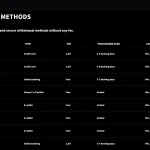
Offshore sites commonly set minimum withdrawal thresholds in the A$75–A$150 range; balances below this minimum may not be eligible for payout.
Withdrawal rules matter because a displayed balance is not the same as money in your bank account. Offshore sites commonly set minimum withdrawal thresholds in the A$75–A$150 range. If a balance falls below the stated minimum, you may not be able to request a payout yet. The threshold is only one condition: the site’s terms may also specify which payment methods are available and what checks are required. Read the withdrawal rules before treating a balance as accessible funds.
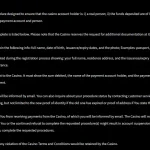
A first cashout commonly triggers KYC, short for “know your customer”: identity checks intended to confirm who is requesting the money. The requested documents may include a passport or driver’s licence and a utility bill. Make sure you understand what information is requested and how it will be handled before sending documents to a service. A request for verification does not itself guarantee that the withdrawal will be approved.
The Australian legal distinction is important here. The Interactive Gambling Act 2001 prohibits operators from providing real-money online casino services to people in Australia. That restriction concerns the operator; players are not criminalised for using offshore sites. Still, a site’s willingness to accept Australian payments or describe a cashout process does not make its service lawful here, nor does it remove the practical uncertainty of dealing with an offshore operator.
For anyone under 18, gambling is not appropriate. For adults, the key point is narrower: a stated withdrawal threshold and a KYC checklist describe possible conditions, not a reliable route to receiving funds. Do not treat a balance shown by an offshore casino as income or as money you can count on.
Bitcoin Pokies in Australia: Payments and Play
Where Search Results Say You Can Play
A page that appears to offer a place to play Mines is not, by that fact alone, evidence that the service can lawfully provide casino games to people in Australia. A result may describe a game, repeat a title, or point to a service operating from overseas; its wording does not establish what is actually available to an Australian visitor.
That distinction matters because the Interactive Gambling Act 2001 prohibits operators from providing real-money online casino games to people physically in Australia. An offshore licence does not make such a service lawful to provide here. ACMA can also ask Australian internet providers to block sites offering prohibited gambling services or advertising them. As a result, a page may be visible in a list of results while the linked service is blocked, changes its access arrangements, or does not load. Visibility is not a finding of legality.
Treat a “where to play” page as a description of what its publisher claims, not as an independent check. A page using a name such as Lucky Mines might refer to a game title, a branded site, or simply wording chosen to attract attention. The name alone cannot establish which one it is, whether the game exists in the form described, or whether it is accessible from Australia. Nor does a confident label such as “available” settle those questions.
Suitability is a separate issue again. A page can describe access without explaining the consequences of using an offshore gambling service or whether its claims are reliable. The absence of a warning is not reassurance, and a polished presentation is not regulatory approval.
Practical Test
Do not treat a link, game name, or location label as permission to use a real-money casino service.
For an Australian reader, the practical test is not simply whether a page says you can play. Check what the page is actually claiming, who is making that claim, and whether it distinguishes its intended audience from people located in Australia. Do not treat a link, a game name, or a location label as permission to use a real-money casino service. That is a conclusion the result cannot supply.
Strategy Claims and the Limits of Risk Control
The appeal of a Mines strategy is easy to understand: a set of rules can sound more reassuring than a decision made one step at a time. But a strategy claim is not proof that a game’s outcome can be predicted, that losses can be avoided or that play can produce reliable income. A tidy sequence of instructions may make choices feel controlled without changing the underlying risk.
Treat claims of a “safe” or “guaranteed” approach with particular caution. Ask what evidence supports the claim, whether it explains the limits as clearly as the supposed benefit, and whether it is selling a system, service or gambling access. Testimonials and confident language do not establish that a method works. Nor does a claim become credible simply because it is attached to a named game or provider.
Pokies Tips and Tricks: What Players Can Control
The same applies to advice presented as a Mines casino game strategy. Without reliable evidence about how a particular version works, you cannot assume that instructions written for one game apply to another. The name Spribe may appear alongside Mines, but that label alone does not verify a strategy, establish how a game operates or show that a promised result is achievable. Be wary of material that fills those gaps with certainty.
Risk controls can help you decide when to stop, but they do not turn gambling into an income source or guarantee that you will leave ahead. Do not chase losses or increase stakes to try to recover them. Gambling can cause serious harm, particularly for people who are vulnerable to it. If you choose to gamble where it is lawful, you must be at least 18 and should set limits you can afford to lose; those precautions do not remove the risk.
Games & Pokies: Australian Casino Game Guide
For readers in Australia, there is an additional boundary: real-money online casino games are prohibited for operators providing them to people in the country. A strategy discussion should not be treated as a reason to seek out such a service. The useful test is not whether a system sounds persuasive, but whether its claims can be substantiated—and whether acting on them would expose you to financial or other harm.
What “Casino Guru” in a Search Result Can Establish
Seeing Casino Guru attached to a result may mean you have found a page presented as an outside review or reference. That label alone does not establish that the page covers the Mines game you have in mind, or that it assesses the particular service named elsewhere in the result.
Check what the page actually identifies. Does it name a specific game, a provider, or an operator? Are those details the same as the ones in the result you followed? A general page about a casino, for instance, would not by itself show that the casino offers a particular Mines-style game. Nor would a mention of Mines prove that a review tested the game or checked how it works.
The distinction matters because search results can place similar terms beside one another without showing that they refer to the same product. A review label is not a guarantee of completeness, accuracy or current availability. Read the page itself, note what it says it covers, and separate its statements from claims made by other pages.
Even a detailed review cannot, on its own, establish that an online gambling service may lawfully offer real-money casino games to people in Australia. The Interactive Gambling Act 2001 restricts operators from providing those services to people physically located here. Treat an outside review as a reference to inspect—not as proof that a particular game or service is suitable or available to you.
Games

Aristocrat Online Pokies in Australia: What’s Verified
The guide examines what online pokie listings can establish, why a verified machine list is...

3-Reel Slots in Australia: How the Games Work
A three-reel label describes the display, while paytables and game rules explain how results are...

Five-Reel Slots in Australia: RTP, Rules and Play
A practical guide to five-reel slots covers paytables, free play, game information panels and the...

7-Reel Slots in Australia: RTP, Rules and Access
A practical guide to bonus mechanics, paytables, version settings, free play and the limits on...

Bonus Buy Slots in Australia: Access, Demos and RTP
The guide explains Australian access restrictions and how demo play can help assess a slot’s...

High-volatility slots in Australia: payout patterns
Volatility describes how often wins tend to occur and how large they may be, but...

Low Volatility Slots in Australia: How They Play
Low volatility describes a broad pattern of more frequent, generally smaller wins—not a schedule for...

New Australian Online Pokies: What Claims Mean
A release label signals timing, but does not establish quality, local availability, game rules or...

Online pokies in Australia: what “best paying” means
A guide to Bitcoin deposits, game credits, verification and withdrawals, alongside the limits on offshore...

Pokie Machines to Play in Australia: What to Know
A practical guide to Australian online-pokie rules, game features, odds, bonus costs and ways to...

Progressive Jackpot Slots: How They Work
See how wager contributions feed a jackpot pool, what conditions can affect eligibility, and why...

Best RTP Slots in Australia: Understanding Returns
RTP describes a game's theoretical return over many spins, while individual results can differ sharply...

Video Slots in Australia: Free Spins, RTP and Access
A practical guide to mobile play, free-spin features, casino access and the limits of RTP...

Bitcoin Pokies in Australia: Payments and Play
Bitcoin changes how funds move, not the underlying pokies game; free play and real-money play...

Casino Dice Games in Australia: Rules and Online Context
A practical overview of dice-game formats, wager rules, round flow and the distinction between a...

Crash Casino Games in Australia: Rules and Evidence
A rising multiplier alone cannot explain how a round works; the specific rules and limits...

Dragon Link Online Pokies in Australia
A machine label alone cannot confirm an online version, its rules or its payment options....

Lightning Link Online Pokies in Australia: What’s Legal
Lightning Link is a venue-based Aristocrat series in Australia, while real-money online casino offers are...

Live Baccarat Online Casino in Australia: Rules
A practical guide to baccarat formats, scoring, odds, AUD sessions and the limits of Australia’s...

Live Blackjack Online Casinos in Australia: Legal Context
The distinction between an accessible gambling website and an authorised service shapes what can be...

Live Roulette in Australia: Rules and Dealer Checks
A practical guide to Australia’s online casino restrictions, English-language dealer claims, roulette formats, table rules...

Plinko Casino Australia: Games, Payments and Rules
A closer look at game information, offshore access, payments and bonus conditions helps distinguish a...

Pokies Tips and Tricks: What Players Can Control
Understand what practical choices can shape your play, and why no pattern, ritual or betting...

Real Cash Online Pokies in Australia: What to Know
Bitcoin affects how funds move, while game rules and operator responsibility remain separate questions. Bitcoin...

Real Money Casino Table Games in Australia
Compare live-dealer streams with RNG-based games and explore how rounds, card games, roulette and poker...

Safe Online Pokies in Australia: What Safety Means
A practical distinction between payment and account safeguards, offshore licensing, and the limits of Australian...