Casinos That Accept Tether USDT in Australia
 Available in AU

A Tether reference alone does not establish USDT support or show whether an online gambling service is available to people in Australia.
Table of Contents
- What “Online” Means for Australian Readers
- What a “Best” USDT Casino Claim Can—and Can’t—Tell You
- Online and Live-Casino Claims Need Separate Evidence
- Bonus and Slots Searches: What Is Not Verified
- Game and Payment Terms Are Not Proof of USDT Support
- USDT, TRC20 and What the Available Evidence Supports
- The Australian Legal Context for Offshore-Casino Searches
- Before You Act on a “Play with Tether” Claim
- Live-Dealer Claims and Crypto Payment Assumptions
- Deposit and Withdrawal Claims: Check What Is Actually Known
- Mirax Casino Payments in Australia: AUD Deposits
What “Online” Means for Australian Readers
When you look for an online casino that takes Tether, you are asking about two separate things: whether a service offers casino gambling online, and whether it accepts USDT as a payment method. A phrase connecting those ideas describes what you want to find. It does not, by itself, establish that a particular service accepts the token or that the service is available to people in Australia.
Tether, commonly identified by the ticker USDT, is a cryptocurrency. In a payment context, “accepts USDT” should mean more than a page mentioning Tether or displaying a crypto symbol. It would need to describe an actual route for making a payment, including what the operator accepts and the conditions attached to that route. Without those details, a reference to Tether is only a claim to assess, not confirmation that you can use it.
The word “online” can also blur important distinctions. It may refer to a website, an account or a service accessed through a browser or mobile device. None of those labels tells you whether the operator offers real-money gambling to Australian residents, whether a payment method is available to those residents, or what rules apply to a transaction. A mobile-friendly page, for instance, is not evidence of a mobile payment option.
Search language often combines several ideas in a few words: Tether, casino, Australia, mobile access, or a live experience. Those combinations can help you identify the subject of a page, but they are not independent proof of the services described. A page may use “Tether casino” in its title while discussing cryptocurrency generally, or it may use “online” to describe access without explaining who can use the service. The wording needs to be matched to specific, checkable information.
Casinos That Accept Visa in Australia · Casinos That Accept Google Pay in Australia
That distinction matters because payment terms are not interchangeable. A casino’s general reference to cryptocurrency does not establish that USDT is accepted; a reference to USDT does not establish that every network or payment route is supported. Nor does it show that a deposit and a withdrawal can both use the same method. Each of those is a separate claim, and a broad label cannot answer all of them.
The same care applies to terms used by Australian readers. “Pokies” is a familiar local word for slot-style gambling, but including it alongside Tether does not prove that an operator offers a particular game or accepts a particular payment. Likewise, “live casino” may signal an interest in live-hosted games, but it says nothing by itself about payment arrangements. The terms identify different parts of a possible service; they should not be treated as evidence for one another.
This guide therefore treats online-casino wording as a set of claims to interpret, not as a recommendation to open an account or transfer funds. The practical question is not simply whether a site uses the words “Tether” and “casino.” It is whether reliable information establishes the exact service, the exact payment method and its conditions, and the relevance of those details to an Australian reader. A name or promotional label alone cannot settle those points.
There is also a difference between finding a page and establishing that its claims are dependable. A page may be accessible, yet its payment information may be unclear, out of date or not specific to Australian customers. A statement that a service “supports crypto” is less precise than a clear description of the accepted asset and the route involved. Even a detailed payment description should be read as information about that stated arrangement, not as a general guarantee about other operators.
Legal Prohibition
Australian law prohibits operators from providing real-money online casino games to people in Australia.
For that reason, references to an Australian Tether casino should be read narrowly. “Australian” might describe the intended audience, the currency used for prices, or simply the wording of a page. It does not establish that an operator is Australian, that its services are lawful for Australian residents, or that a payment route is available to them. Those are distinct matters, and the label alone does not resolve them.
The legal setting is an important part of that distinction: Australian law prohibits operators from providing real-money online casino games to people in Australia. This guide is not an invitation to use an offshore service. Its purpose is to clarify what payment and service language can—and cannot—tell you, without turning a search phrase into an endorsement.
If a page makes a claim about Tether, look for a precise description rather than relying on a headline. The relevant details would need to say what is accepted, how the payment is handled and which customers the claim covers. If those details are not stated, the careful reading is that the wording expresses an offer or intention, not a verified payment arrangement. The distinction is modest, but it prevents a search label from doing the work of evidence.
What a “Best” USDT Casino Claim Can—and Can’t—Tell You
If you’re looking for casinos that accept Tether (USDT) in Australia in 2026, use this list as a starting point for checking the available options. Consider the licensing and payment details provided for each operator before choosing where to play.
1. JustCasino
License: Curacao Gaming Control Board JustCasino is listed with a licence from the Curacao Gaming Control Board. Check its current USDT payment options before depositing.
2. 7Bit Casino
License: Curacao, operated by Dama N.V. 7Bit Casino is listed as operating under a Curacao licence through Dama N.V. Verify that USDT deposits are available to you before signing up.
3. Uptown Pokies
License: Curacao (operating since 2017) · Min. deposit: A$20 Uptown Pokies has operated since 2017 under a Curacao licence, and its minimum deposit is A$20. Check the casino’s current USDT payment terms before depositing.
4. JeetCity Casino
License: Curacao eGaming (Dama N.V.) JeetCity Casino is listed with a Curacao eGaming licence and Dama N.V. as its operator. Confirm its current USDT options before you deposit.
5. House of Pokies
License: international iGaming licence – jurisdiction not named in the source · Payout speed: PayID 1-24 hours · Min. deposit: A$30 (PayID from A$10) House of Pokies lists an international iGaming licence, but the source does not name the jurisdiction. PayID payouts are listed at 1–24 hours, with a A$30 minimum deposit (A$10 for PayID); check whether USDT is currently supported.
6. Neospin
License: Curacao Gaming Control Board OGL/2023/176/0095 (Hollycorn N.V.) Neospin is listed with Curacao Gaming Control Board licence OGL/2023/176/0095, held by Hollycorn N.V. Check its current USDT payment options before depositing.
7. Thor Casino
License: Curacao – Antillephone N.V. (Versus Odds B.V.) · Min. deposit: EUR 20 Thor Casino is listed under a Curacao licence from Antillephone N.V., with Versus Odds B.V. named in connection with its operation. Its minimum deposit is EUR 20; confirm the current USDT terms before you deposit.
8. WinSpirit Casino
License: Curacao eGaming OGL/2024/923/0383 (Antillephone N.V.) · Min. deposit: A$30 WinSpirit Casino is listed with Curacao eGaming licence OGL/2024/923/0383, held by Antillephone N.V. Its minimum deposit is A$30; check whether USDT deposits are currently available.
9. Kingmaker
Payout speed: crypto ~90 minutes, fiat 1-5 days · Min. deposit: A$30 Kingmaker lists crypto payouts at around 90 minutes and fiat payouts at 1–5 days, with a A$30 minimum deposit. Confirm that USDT is among the supported crypto options before depositing.
10. Wild Tokyo
License: Curacao · Payout speed: crypto 30-60 minutes, fiat 1-5 days · Min. deposit: A$10 Wild Tokyo is listed with a Curacao licence and reports crypto payouts of 30–60 minutes and fiat payouts of 1–5 days. Its minimum deposit is A$10; check whether USDT is currently supported.
Calling a casino the “best” is a judgement, not evidence. The label may reflect an advertiser’s priorities, a reviewer’s chosen criteria or simply a headline designed to attract attention. On its own, it tells you neither whether a service accepts Tether (USDT) nor whether the payment arrangement would be suitable for you.
A meaningful comparison needs a clearly stated basis. That would include evidence of the specific service being assessed, the terms that apply to Australian users and the criteria behind the ranking. Without those details, “best” is difficult to test: one publisher might prioritise payment options, another might focus on game selection, and neither label tells you how those claims were checked. A list of names is not a substitute for that explanation.
The wording can also blur separate questions. A site described as a Tether casino might be claimed to accept USDT, but that does not establish which network or payment route is involved, or whether the claim applies to Australian customers. Nor does it establish the terms for deposits or withdrawals. Those are distinct matters, and a broad endorsement cannot settle them all.
Casinos That Accept Neteller in Australia: What to Check · Casinos That Accept POLi in Australia: What to Verify
The same caution applies when a ranking is framed around Australian players. Adding “Australia” to a claim does not demonstrate that the service is available to people in the country, that its stated terms apply to them, or that the service can lawfully provide online casino games here. The Interactive Gambling Act 2001 prohibits operators from offering real-money online casino games to people physically located in Australia. A favourable rating does not change that legal position.
There is another important limit to the word “best”: suitability depends on what is being evaluated. A payment method may matter to one person, while clear terms or the ability to verify a claim may matter more to another. A single overall score can conceal those differences. Before treating a ranking as useful, look for the criteria, the evidence supporting each criterion and any limits on the reviewer’s assessment. If those are not made clear, the score is hard to interpret.
The phrase “latest” does not resolve the problem. A recently updated page may still repeat an unsupported claim, and a date alone cannot establish that a payment option or its conditions have been checked. Claims about a casino site can change; a reader needs to know what the statement covers, not just when a page was labelled current. A confident tone is not a verification method.
Do
- Look for the criteria behind a ranking
- Check evidence supporting each criterion
- Verify the limits of the reviewer’s assessment
Don’t
- Treat a “best” label as evidence of suitability
- Assume a high score confirms a payment method
- Rely on a date to verify payment conditions
A list can be especially persuasive because it appears comparative. Yet ranking several services does not make the underlying information reliable. If the entries do not show what was checked and what evidence supports the comparison, the order may convey more certainty than the details justify. The headline may answer which name appears first, but not whether the claim behind that name is accurate.
There is also a difference between an editorial comparison and an invitation to use a service. In Australia, advertising real-money online casino services is prohibited, and offshore casino operators are not a lawful alternative for operators to offer to Australian residents. Australian consumer law does not protect players who use offshore casinos. A “best” label should not soften those facts or turn a promotional claim into consumer guidance.
For that reason, treat a superlative as a prompt to examine the claim, not as a verdict. Ask what “best” means in that particular statement, whose assessment it represents and whether it is supported by specific, applicable evidence. If the answer is unclear, the ranking cannot establish that a USDT casino is suitable, available or lawful for an Australian reader.
Online and Live-Casino Claims Need Separate Evidence
A claim about a “best” online casino and a claim about a live-casino service are not interchangeable. Adding Tether or USDT to either description does not establish that a particular operator accepts it, or that its live-casino offering is available to people in Australia. Each part needs evidence of its own.
Mastercard Casinos in Australia: What to Verify
For an operator to support a claim about live casino and Tether, the details would need to line up: the operator would need to be identifiable, its published terms would need to state that it accepts USDT, and its live-casino offering would need to be clearly described as available to the intended audience. A general statement about cryptocurrency payments, or a page mentioning live casino without naming supported payment methods, cannot establish both points. Nor does a search result or a promotional label prove that the claim is current.
That distinction matters when a phrase such as “best live casino accepting Tether” is treated as though it describes a verified service. “Best” implies a comparison, but a comparison needs a defined basis and reliable information about the options being compared. If the underlying operator and service cannot be substantiated, a ranking would give an unsupported claim the appearance of a finding.
The same caution applies to broader wording about online casinos that accept Tether. A site might discuss cryptocurrency generally, while its own payment terms say something different; the currency may not be available to every customer; or a live-casino page may not establish anything about the cashier. A brand name appearing beside the words “Tether” and “live casino” is not enough to show that all those details belong together.
Look for specific, attributable statements rather than category labels. Relevant evidence would come from the operator’s own current terms or payment information and would make clear which service and payment method are covered. If those details are absent, unclear or inconsistent, the claim remains unsubstantiated. That does not prove that no such service could exist; it means the description cannot be relied on as confirmation of one.
A brand name appearing beside the words "Tether" and "live casino" is not enough to show that all those details belong together.
“Online” and “live” also need to be read carefully. A page can use both terms without demonstrating that it offers a particular live-casino product, much less one connected to a confirmed USDT payment route. Search wording compresses several assumptions into a few words. Each assumption needs separate support; joining them in one phrase does not supply it.
For Australian readers, these descriptions should not be read as a recommendation to use an offshore casino. The legality of operators offering online casino games to people in Australia is a separate and important issue, not something a “best” label or a payment claim resolves.
Bonus and Slots Searches: What Is Not Verified
Searches for Tether-related slot games and casino bonuses combine two different claims: that a gambling product exists and that it is connected to a particular payment method. Search wording alone establishes neither.
Bonus language can make a result sound more definite than it is. A welcome offer, a deposit bonus and a no-deposit promotion are different types of inducement, but attaching “Tether” to any of those labels does not show that the offer is available, that it applies to Australian readers or that it can be used with USDT. Nor does the phrase “free slots” establish that a game or offer is genuinely free of payment conditions.
The same caution applies to labels for online or video slots. A page can use familiar game terminology without demonstrating that a named game is available or that it supports USDT. General descriptions and promotional wording are not the same as evidence about a specific product.
Trustly casino sites in Australia: what payments prove
This is not a question of which bonus is most attractive. A superlative such as “best” does not supply evidence about the underlying game, the offer’s conditions or whether the stated connection to Tether is real. Repeating a bonus label as if it were a confirmed offer would blur the line between a claim and a fact. The distinction matters particularly when language suggests a reward without a deposit: the label alone says nothing reliable about eligibility or any conditions attached.
These points concern claims about games and inducements, not the mechanics of cryptocurrency payments. A bonus description does not establish that a casino accepts USDT, and a reference to Tether does not confirm that a particular slot game or promotion is available. Keeping those claims separate prevents promotional language from being mistaken for evidence.
For Australian readers, this distinction is also important because real-money online casino games are prohibited services when offered to people in Australia. A search result or promotional label should not be treated as confirmation that such an offer is lawful, available or suitable.
Game and Payment Terms Are Not Proof of USDT Support
A casino may describe its games and payment methods in separate parts of its site. Seeing a game category alongside a reference to Tether does not establish that the cryptocurrency can be used to fund play. Nor does a payment label, on its own, show which games—if any—are available through that route.
This distinction matters when a description uses broad wording such as “casino games with Tether.” It may refer to a site that accepts the currency, to games offered by a casino that mentions it, or simply to two ideas placed together in promotional copy. Those meanings are not interchangeable. To establish that USDT is accepted, the operator would need to identify it as a payment option and explain the applicable terms. A games catalogue cannot do that job.
Attention: A reference to Tether does not prove that a casino allows customers to remain anonymous, as most operators require identity verification.
The reverse is also true. A payment page that lists a cryptocurrency does not identify particular games that can be played with it. Game availability and payment acceptance are separate claims, and each needs evidence of its own. A label such as “Tether games” is too ambiguous to tell you whether it describes a payment method, a game category, or a marketing phrase.
The same caution applies to wording about anonymous play. A reference to Tether does not prove that a casino allows customers to remain anonymous. Online casinos typically require customers to complete Know Your Customer checks before financial transactions. These checks involve verifying a customer’s identity; a payment method’s name does not remove that requirement. “Anonymous” should not be treated as an established feature simply because it appears beside a cryptocurrency reference.
Bonus language also needs to be read separately from payment language. Mentioning a Tether bonus does not establish that USDT deposits qualify, that a particular offer exists, or what conditions apply. A promotional phrase alone cannot confirm an operator’s payment arrangements or the terms attached to an offer. Treating a bonus label as proof of a working payment route would turn two unverified claims into one.
The practical test is to look for clear, consistent information in the operator’s cashier, payment terms and relevant account conditions. Does the cashier explicitly name USDT? Do the stated terms describe how that payment method is handled? Does the game information identify what is actually offered, rather than merely placing a currency beside a broad catalogue label? If these details do not align, the wording does not settle the matter.
Neosurf Casinos in Australia: What Search Results Confirm
This is not a technical distinction for its own sake. Payment support, game availability, identity checks and promotions are different parts of a service. Evidence for one does not automatically establish the others. A reader should not infer that a specific game accepts Tether, or that Tether makes play anonymous, from a casino’s general use of those terms.
USDT, TRC20 and What the Available Evidence Supports
USDT is the name commonly used for Tether, while TRC20 refers to a token standard associated with the Tron network. When a payment description pairs USDT with TRC20, it is making a more specific claim than simply saying that cryptocurrency is accepted: it points to both a particular digital asset and a network. Those labels describe what a payment route purports to handle; they do not, by themselves, establish that a service accepts it.
That distinction matters when you encounter claims about a Tether casino in Australia or a casino accepting USDT through TRC20. A general reference to crypto payments cannot answer whether USDT is supported, which network applies, or whether the same route is available for deposits and withdrawals. Each is a separate detail. Treating them as interchangeable can leave you with a mistaken picture of what a payment option actually covers.
USDT and TRC20
USDT is the commonly used name for Tether, while TRC20 refers to a token standard associated with the Tron network. Pairing these terms specifies both a digital asset and a network.
There is a limited comparison that can be made about cryptocurrencies. Bitcoin and Ethereum can offer instant deposits and withdrawals with limited or no fees. That general statement applies to those named cryptocurrencies; it does not establish equivalent timing or costs for Tether, or for any particular network used to transfer it. The word “crypto” is not a payment specification, and a broad description should not be read as a promise about an individual transaction.
The same caution applies to wording such as “real-money” Tether payments. It may sound like a description of a usable cashier option, but the phrase alone does not set out the asset, network, or transaction terms. If a service’s claim names USDT but not the network, it leaves an important technical detail unresolved. If it names TRC20, that still does not establish that the route is available to you or how it behaves.
For Australian readers, the location in a claim is not proof that the stated payment arrangement is available to people in Australia. A page can use Australian wording while describing a general service, a different payment route, or a claim that does not specify its conditions. Keep the claim narrow: evidence that some cryptocurrencies can be quick and inexpensive is not evidence that USDT has those same characteristics in a particular setting.
In practice, separate three questions when reading a payment description: whether it names USDT, whether it identifies TRC20, and whether it actually explains the relevant transaction terms. A claim that answers only one does not answer the others. That is a more reliable way to read the terminology than treating “Tether,” “crypto,” and “TRC20” as interchangeable labels.
Litecoin Casinos in Australia: What Claims Establish
The Australian Legal Context for Offshore-Casino Searches
A payment method does not change the legal status of the service offering it. Whether an overseas website describes its cashier as accepting Tether, USDT or another cryptocurrency, the relevant question is whether it provides real-money online casino games to people in Australia.
The Interactive Gambling Act 2001 prohibits operators from offering online casino games to Australian residents. The restriction concerns the service, not the currency used to fund an account. A crypto payment option therefore does not make an online casino lawful to provide in Australia, nor does an offshore operator’s own description of its service override Australian law.
The law is directed at operators. It does not explicitly make it a criminal offence for an individual to use an offshore gambling site. That distinction matters, but it should not be mistaken for a sign that an offshore casino is approved, locally regulated or protected by Australian safeguards. The Australian Communications and Media Authority (ACMA) administers enforcement of the Act, including action against prohibited services.
There is also a practical consumer-protection gap. Australian consumer law does not protect players who use offshore casinos. If a dispute arises over an account, payment or withdrawal, you should not assume that the protections available when dealing with an Australian business will apply. A site’s claims about its location, licence or payment methods do not, by themselves, establish that Australian consumer protections cover you.
For that reason, a claim that a site accepts Tether is not enough to assess whether it is lawful to offer casino games to Australians or what recourse a customer may have. The legal issue is not settled by a successful transfer, a mobile-friendly page or an account that appears accessible. Those details concern how a site presents itself; they do not change the prohibition on operators providing online casino games to people in Australia.
Consumer Protection
Australian consumer law does not protect players who use offshore casinos if a dispute arises over an account, payment, or withdrawal.
This context is important when considering any offshore-casino claim. It is not a recommendation to use such a service. It is a distinction between the operator’s legal obligations and the limited protection available to a customer dealing with an offshore business. A payment label may answer what a site says it accepts. It does not answer whether the service is lawful for Australian residents or whether Australian consumer law will help if something goes wrong.
Before You Act on a “Play with Tether” Claim
A phrase about playing with Tether can sound like a description of a working payment option. It is not evidence that a particular service accepts USDT, or that a payment route is available to Australian users. The wording may refer to a general topic, repeat an operator’s claim, or leave out conditions that would determine whether a transaction could actually be made.
Treat claims about playing with Tether as claims to verify, not as instructions. A page mentioning USDT does not by itself establish that it is accepted for deposits, that it can be used for other financial transactions, or that the information applies to your location. Nor does a mention of games alongside Tether show that the payment method is available for them. Without clear, current terms tied to an identifiable service, the practical meaning remains uncertain.
Account checks are another separate issue. Online casinos commonly ask customers to complete Know Your Customer, or KYC, checks before carrying out financial transactions. These checks involve confirming a customer’s identity. Their presence does not show that a casino accepts USDT, and completing them does not establish that a payment method is available. KYC is a verification step, not a guarantee of access or a sign that an offering is suitable.
Casinos that accept PayID in Australia: what to check
A “no KYC” claim should be read just as carefully. It may describe a narrow part of account use, omit circumstances in which identity checks are required, or fail to explain what happens before financial transactions. Do not infer from the phrase that a service will process payments without checks, or that its claims about Tether are reliable. If the terms do not explain when identity verification applies, the uncertainty is itself relevant.
Keep the two questions distinct: what identity checks apply, and whether a specific USDT payment route is actually documented. One answer cannot stand in for the other. A page that answers neither clearly does not become more informative by using confident wording or pairing Tether with language about playing.
Before relying on a claim, look for terms that identify the payment method, the transaction it covers and any conditions attached to it. If those details are absent or unclear, you cannot conclude that the advertised route is available to you. The wording may describe an idea; it does not establish a usable payment option.
Live-Dealer Claims and Crypto Payment Assumptions
A live-dealer label and a Tether payment claim describe different things. The first concerns how a game is presented; the second concerns how money is transferred. Seeing both in the same description does not establish that a particular service accepts USDT for live-dealer play.
A live-dealer label concerns game presentation, whereas a Tether payment claim concerns money transfer; one does not prove the other.
That distinction matters when comparing claims about live-dealer casino platforms and crypto payments. A site might discuss live-dealer games in one place and list cryptocurrency among its payment methods elsewhere. Neither statement, on its own, confirms that USDT can be used for those games, or that the same payment option is available to Australian visitors. A combined headline is still a claim, not evidence of a working payment route.
General information about cryptocurrency payments cannot fill that gap. Bitcoin and Ethereum can offer instant deposits and withdrawals with limited or no fees, but those statements do not establish the timing, costs or availability of USDT transactions. They also do not show that a particular operator accepts Tether. The same applies to references to TRC20: a network label does not prove that a service supports deposits or withdrawals through it.
If you encounter a claim linking Tether with live dealers, look for clear, consistent details about the payment method and the games being described. A generic crypto logo or a broad list of supported currencies is not enough to establish that USDT is accepted for a particular purpose. Terms can differ between payment methods, and a payment option mentioned in general material may not be available in every part of a service.
The wording “live dealer” can make a payment claim sound more specific than it is. It does not answer whether USDT is accepted, which network is supported, or what transaction conditions apply. Nor does a general statement about crypto explain the treatment of Tether. Those are separate questions, and one label should not be treated as a substitute for details addressing the other.
For Australian readers, the practical point is simple: descriptions of live-dealer games do not confirm Tether support, and a crypto payment claim does not establish a live-dealer USDT service. Keep the two claims separate when assessing what a page actually says.
Casinos That Accept Apple Pay in Australia: What to Check
Deposit and Withdrawal Claims: Check What Is Actually Known
A deposit label and a withdrawal promise are separate claims. Seeing Tether or USDT mentioned in connection with a casino does not establish that deposits and withdrawals are both available, or that they use the same process. Nor does the word “instant” tell you how long a particular transaction takes.
There is a general comparison for some cryptocurrencies: Bitcoin and Ethereum can offer instant deposits and withdrawals with limited or no fees. That information cannot be carried over to USDT. It does not establish a Tether payment route, its processing time, or whether a fee applies. No particular USDT deposit or withdrawal timing or fee can be stated as a general rule.
The same distinction matters for “no deposit” claims. The phrase alone does not tell you what is offered, who qualifies, or what conditions attach to a bonus. It is not evidence of a Tether deposit method, and it does not establish that a withdrawal will be available. Treating a bonus label as a payment term confuses two different things.
Casinos That Accept CashToCode in Australia
A claim of fast or instant Tether withdrawals also needs more than a headline. A deposit may be described one way while withdrawals depend on separate requirements or processes. Without specific terms tied to an actual service, neither the speed nor the cost can be assumed. “Crypto” is not a single payment method with uniform conditions.
For Australian readers, these distinctions do not make an offshore casino an endorsed option. Real-money online casino games cannot lawfully be offered to people in Australia, and Australian consumer law does not protect players using offshore casinos. A payment claim should not obscure that context.
In short, general statements about Bitcoin and Ethereum do not establish how USDT transactions work at any particular casino. Deposit availability, withdrawal availability, fees, timing and bonus conditions are separate matters; a broad claim about one does not prove the others.
How do you check if casino sites accept Amex deposits?
Check the casino cashier for American Express as a deposit option. If it is available, you can select it, enter your card details and the deposit amount in AUD, and submit the payment.
What are the deposit and withdrawal limits at the best Amex casinos?
Limits are set by each casino and can vary. Check the casino’s cashier or payment terms for its Amex deposit and withdrawal limits.
Can I withdraw winnings directly to my American Express card?
Some casinos may not allow withdrawals to American Express, and you generally need to have deposited with Amex first. Withdrawal fees may also apply.
Are there any fees for depositing with American Express?
Amex deposits are typically free, but a casino may charge a 1.5% surcharge, and a 3% currency conversion fee may apply. Withdrawal fees may also apply.
Which online casinos accept American Express for deposits?
Jackpot City Casino, Spin Palace, Ruby Fortune, Ignition Casino, Joe Fortune, and PlayAmo are named as operators that support Amex deposits for Australian players.
How can I know if an online casino will accept American Express?
Check the casino’s cashier for American Express as a deposit option. Acceptance can vary, and an Amex payment may still be blocked by the card issuer.
Can I use Amex to withdraw winnings from an Australian online casino?
Some casinos do not allow Amex withdrawals, and you generally need to have made a previous deposit with Amex. Check the casino’s withdrawal terms, including any fees.
Mirax Casino Payments in Australia: AUD Deposits

Mirax Crypto Casino Payments in Australia
Mirax supports cryptocurrency payments and currently lists major assets including Bitcoin (BTC), Ethereum (ETH) and...
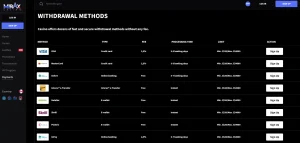
Mirax Casino Withdrawals in Australia: Payout Process
Mirax's current official Terms state that the maximum amount processed to a player is €10,000...

Anonymous crypto casinos in Australia: legal basics
Australian law bars online casino games for local residents, while crypto payments and foreign licences...

Aussie Crypto Casinos in 2026: Offshore Guide
A practical guide to crypto payments, platform claims, Australian access and the limits of what...

Online Casino Payment Methods for Australians
Payment categories differ in speed, availability and cash-out support, and none changes the legal position...

Casino Sites That Accept Amex in Australia: How It Works
Acceptance depends on each casino’s payment arrangements, with deposits, withdrawals, checks and possible charges varying...

BPAY casino sites in Australia: what is confirmed
BPAY availability must be confirmed with each operator, and deposit support does not establish withdrawal...

Casino Sites Accepting Credit Cards in Australia: Amex
Amex availability can vary, and a cashier listing is separate from legality, withdrawal eligibility and...

Australian Casino Sites Accepting EcoPayz: Key Checks
The article separates the legality of offshore casino services from unverified claims about EcoPayz deposits,...

Osko Casino Sites in Australia: What Can Be Verified
The Interactive Gambling Act 2001 prohibits operators from providing real-money online casino games to people...

Paysafecard Casino Sites in Australia: Payment and Law
Paysafecard availability is only one part of the picture: Australian law and withdrawal conditions require...

Casino Sites That Accept Skrill in Australia: What to Check
A payment-method listing can differ from the options shown in the cashier, while deposits, withdrawals,...

Trustly casino sites in Australia: what payments prove
Trustly availability can show a payment route, but it does not establish an operator’s authority...

Under-an-hour casino withdrawals in Australia
A withdrawal has an operator-review stage and a separate transfer stage, so a fast payment...

No-Verification Casino Withdrawals in Australia
The guide explains how KYC, payment methods, bonuses and withdrawal timing affect access to casino...

Casinos That Accept Apple Pay in Australia: What to Check
A practical look at what an Apple Pay deposit claim establishes, how payment options differ,...

Bitcoin casinos in Australia: rules and payments
Australian rules focus on the gambling service, while Bitcoin payments bring their own checks around...

Bitcoin Cash casinos in Australia: legal and payment checks
BCH payment availability does not settle legality; operator checks, bonus terms and transaction steps matter....

Casinos That Accept CashToCode in Australia
A mention of CashToCode alone does not confirm casino acceptance, deposit terms, or withdrawal processing....

Casinos that accept Ethereum in Australia: what to know
The Interactive Gambling Act applies to offshore real-money casino services regardless of whether they accept...

Casinos That Accept Google Pay in Australia
Retail wallet use does not confirm online cashier support, and a deposit option does not...

Litecoin Casinos in Australia: What Claims Establish
General cryptocurrency payment claims do not establish whether Litecoin is supported for deposits or withdrawals...

Mastercard Casinos in Australia: What to Verify
A card logo or a site's Australian focus does not prove Mastercard can fund online...

MiFinity Casinos in Australia: What Is Verified
The evidence distinguishes operator-specific payment acceptance from game availability and notes that Australian law prohibits...

Neosurf Casinos in Australia: What Search Results Confirm
A Neosurf mention alone does not establish deposit access, pokies availability, withdrawals or bonus compatibility...

Casinos That Accept Neteller in Australia: What to Check
Neteller availability does not establish withdrawal eligibility or make an offshore casino an authorised Australian...

Casinos that accept PayID in Australia: what to check
PayID labels do not establish operator legality or confirm that deposits, withdrawals or bonuses are...

Casinos That Accept PayPal in Australia: Legal Checks
The Interactive Gambling Act 2001 bars operators from providing real-money online casino games to people...

Casinos That Accept POLi in Australia: What to Verify
A casino’s payment claims need to be checked against its current terms or cashier, while...

Casinos That Accept Visa in Australia
Visa availability can vary by operator, and a broad comparison with Amex does not confirm...

Easy Withdrawal Casinos in Australia: Payment Guide
Payout speed depends on both the casino’s approval process and the payment route, so advertised...

Fast Casino Withdrawals in Australia: Payment Methods
Processing, payment-network steps and site approval all affect how quickly funds arrive. How Casino Withdrawals...

Instant Bank Transfer Casino Payments in Australia
The guide distinguishes bank-linked deposits, direct transfers and withdrawal processing, while explaining the legal limit...

Instant PayID Withdrawals in Australia: What to Know
PayID can move released funds in real time, while casino review and payout terms shape...

Instant PayID Casino Withdrawals in Australia
PayID can move funds between participating bank accounts in real time, but approval and release...

PayID Pokies in Australia: How Payments Work
PayID uses an identifier to direct bank transfers, while casino payment instructions and account checks...

No KYC Casinos in Australia: Cashout Checks
Crypto and PayID can affect how funds move, while verification and bonus wagering rules may...

Online Pokies Instant Withdrawals in Australia
The guide separates casino approval from transfer time and explains how payment routes, limits, fees...

Online pokies with PayID in Australia: payments
PayID links an identifier to a bank account, while transfer checks, fees, limits and site...

Pay by Phone Casinos in Australia: PayID Explained
PayID uses an identifier such as a mobile number or email address to send funds...

Quick Withdrawal Casinos in Australia: Payout Times
Cashout timing depends on both casino processing and the payment provider, while availability and limits...

Same-Day Payout Casinos in Australia: How It Works
A withdrawal involves operator review followed by payment delivery, so the advertised transfer speed may...

Solana Casino Comparison in Australia
The guide separates SOL ownership from offshore casino access and covers payments, wagering rules, game...